Sardegna · Ogliastra
Culurgionis d'Ogliastra
Sardinian potato and cheese ravioli
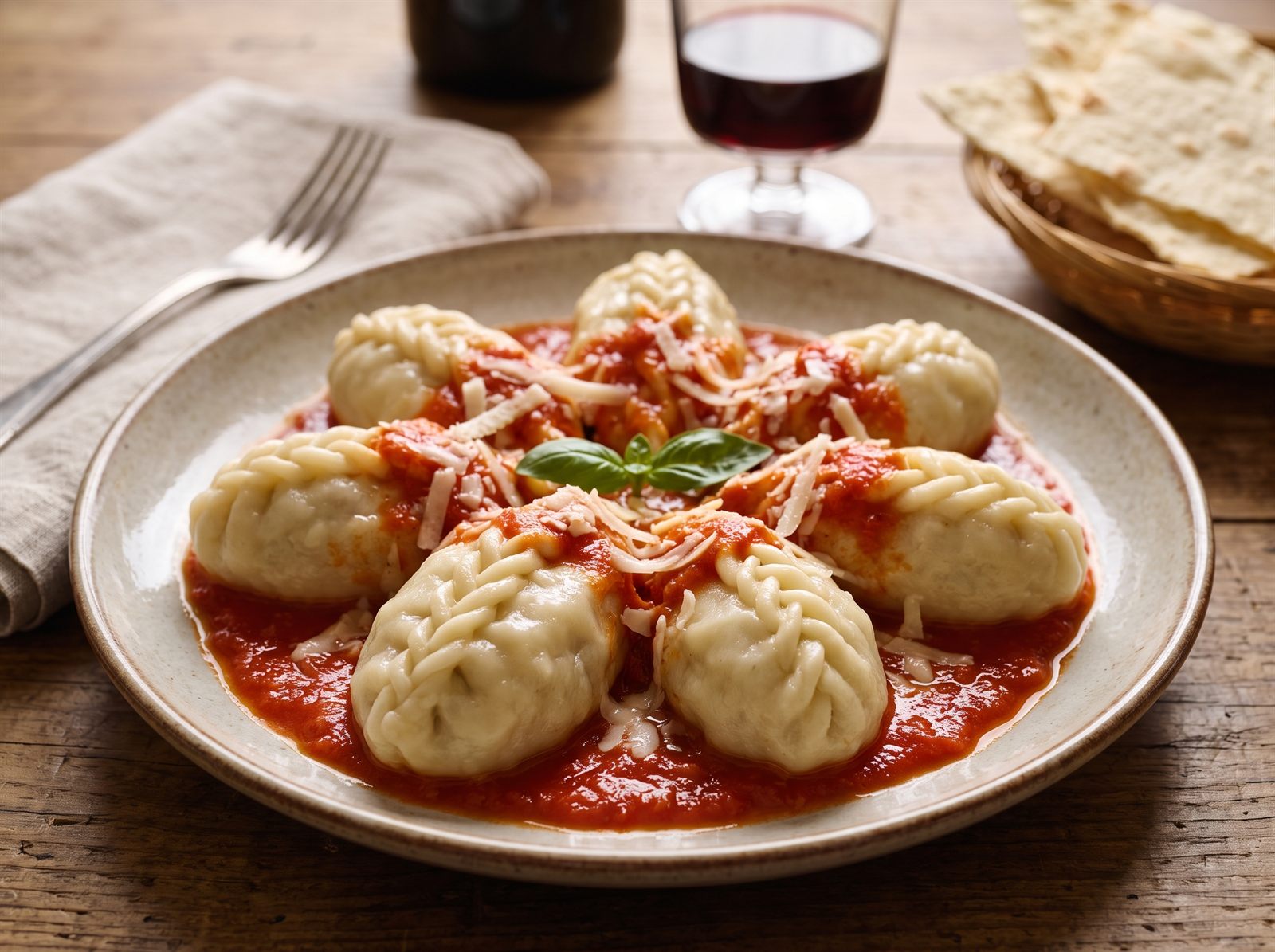
Potato and cheese ravioli closed by hand with a pleated seam like an ear of wheat — a PGI of the Ogliastra area of eastern Sardinia.
- Course
- Primo piattoPasta & rice
- Serves
- 4
- Prep
- 1 h 30 min
- Cook
- 10 min
La provenienza
Where this recipe comes from
‘Culurgionis d'Ogliastra’ is a Protected Geographical Indication, registered by the European Union in 2016. The specification describes a little bundle of pasta, 20–33 grams, filled with potato and a blend of cheeses and closed by hand with at least ten pinches, alternately left and right, into a seam that looks like an ear of wheat — the ‘spighitta’.
The filling is mostly potato, with a mix of cheeses: casu axedu, a fresh, sour Sardinian cheese, and pecorino or other sheep's, goat's or cow's milk cheeses. Mint, garlic, basil or onion may be added; mint and garlic are the classic choice. The culurgionis are made in the villages of Ogliastra, the mountainous area of eastern Sardinia, and by tradition in neighbouring Esterzili, Sadali and Escalaplano.
By tradition — not part of the specification — they were made to honour the dead in early November, the wheat-ear seam being a wish for a good harvest. The specification was amended in 2019; this recipe follows the registered text.
- Provenance
- EU-codifiedThe dish itself is protected by an EU specification (TSG, PDO or PGI) that fixes how it is made.
- Defined by
- European Union
- Reference
- PGI ‘Culurgionis d'Ogliastra’ — Regulation (EU) 2016/1729, 2016
Ingredienti
Ingredients
For the dough
For the filling
To serve
Preparazione
Method
Tap a step to mark where you are.
Errori comuni
Common mistakes
- Using only one cheese: the specification asks for a blend, typically fresh sour casu axedu with aged pecorino.
- Overfilling — the seam cannot close and they burst while cooking.
- Closing them with a fork or a mould: the wheat-ear seam is made strictly by hand.
Fuori dall'Italia
Cooking it outside Italy
- Casu axedu is almost impossible to find outside Sardinia; a fresh, tangy goat's cheese is the closest substitute.
- Pecorino Sardo or Fiore Sardo are worth seeking out; Pecorino Romano is much saltier.