Piemonte · Asti
Bagna càuda
Piedmontese warm garlic and anchovy dip
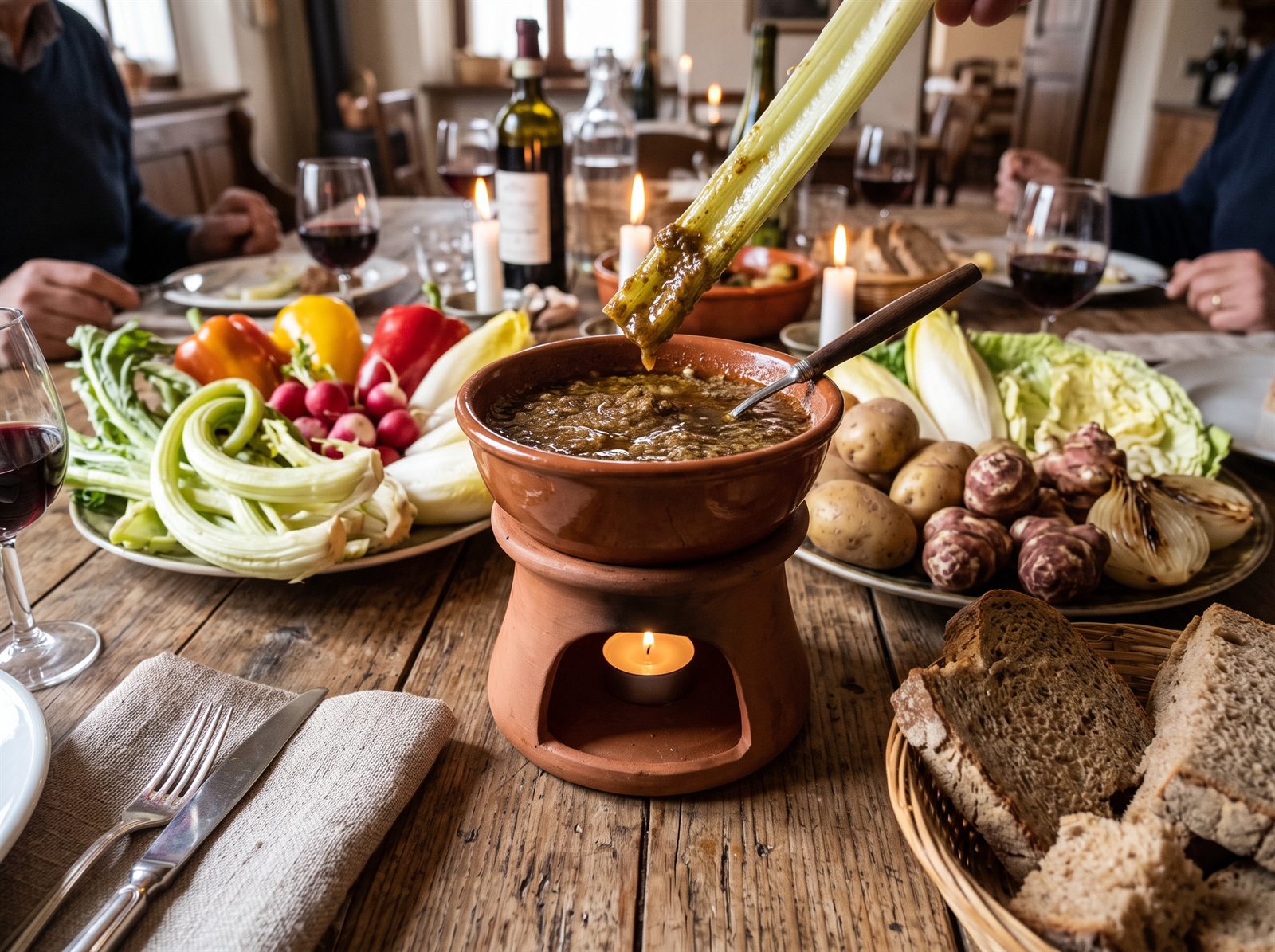
A pot of garlic, anchovies and olive oil kept warm at the table, with autumn vegetables for dipping — in the recipe the Accademia Italiana della Cucina deposited in Asti in 2005.
- Course
- AntipastoStarter
- Serves
- 4
- Prep
- 30 min
- Cook
- 45 min
La provenienza
Where this recipe comes from
Bagna càuda means ‘hot bath’ in Piedmontese. It is a dish of the grape harvest in the Asti and Monferrato hills, made with salted anchovies that once reached Piedmont along the salt roads from Liguria.
On 7 February 2005 the Asti delegation of the Accademia Italiana della Cucina deposited a reference recipe with a notary in Costigliole d'Asti. The deed is not published online; this recipe follows the detailed accounts of it listed in the sources.
It comes with customs of its own: you never dip bread into the shared pot, which would take more than your share, and at the end of the evening eggs are scrambled in the last of the sauce.
- Provenance
- Deposited recipeAn official recipe filed with an Italian Chamber of Commerce or a notary by a recognised culinary body.
- Defined by
- Accademia Italiana della Cucina, Asti delegation
- Reference
- Recipe deposited with a notary in Costigliole d'Asti, 2005
Ingredienti
Ingredients
To dip
Preparazione
Method
Tap a step to mark where you are.
Errori comuni
Common mistakes
- Letting the garlic brown — it becomes bitter and overpowering.
- Dipping bread into the shared pot: by custom, bread is not used.
- Rushing it: the garlic needs a long, gentle cook to turn sweet.
Fuori dall'Italia
Cooking it outside Italy
- For a gentler bagna càuda — an accepted variant — first cook the garlic in a glass of milk instead of oil, drain it, then continue with the anchovies and oil.
- Cardoons are rare abroad; celery hearts and fennel are the closest substitutes.